Teaching Arts & Crafts at a Men’s State Prison

When I started working over three years ago as a librarian for a men’s state prison, it was my first time as a solo librarian where I had (almost) total control over how we ran things. It had been a hot minute since a person with public library experience was in this position (let alone someone getting their MLIS), so there were some services, like programming, that essentially needed to be built from the ground up. About a year before this job, I really started diving into creative hobbies like collage and junk journaling. I did not know at the time, but my recently discovered love for arts and crafts would soon become very handy when taking those next steps in building up my role at the prison.
I was inspired by a talk my colleague gave at our annual professional development conference and hosted my first crafting class in June of 2025 (literally on my birthday) where we covered the artist Alma Thomas and made homages to her work. Even as a program-based facility, this was pretty different from other classes being offered at the time, so my programs quickly became popular with my patrons. I took that as a sign to keep going, teaching as often as our schedule would allow (about once every month or two), and in a full-circle moment one year later, I was able to give a talk at this year’s work conference about what I’ve learned from my series of crafting programs. Now that I’ve had a few months, I wanted to adapt that presentation into a longer-form blog post to share with you all!
The Value of Crafting
When I am not working as a librarian, reading a book, or going down YouTube rabbit holes, one of my main hobbies these days is getting crafty. I sometimes use the terms “craft” and “art” interchangeably but lean towards using the word “craft” (regardless of medium) because it personally feels like a more grounded term that is accurate to the type of stuff I make. I’ve dabbled in a few different areas but what I enjoy the most is visual journaling (a catch-all term that includes scrapbooking, collage, junk journaling, etc.). Despite the time I’ve invested in this hobby, I wouldn’t say I’m “good” in an objective sense, but that is beside the point. I don’t make my journal spreads to try to gain an audience or deliver a message. I make them because I find this form of expression simultaneously fun and therapeutic. It turns out that isn’t just anecdotal. There have been studies done on the positive effects of having a creative practice:
A study published in The Journal of Creativity in 2024 called “Creative Expression and Mental Health,” which was a systematic review of empirical studies and theoretical frameworks around the question of how creativity affects mental health, said, “A substantial body of research consistently indicates a robust and positive link between participation in creative activities and diverse dimensions of mental health. This research has explored a range of creative activities, including visual art, writing, music, and crafts, and have consistently reported significant benefits.” Some of the diverse dimensions of mental health it’s talking about and dives further into are emotional regulation, cognitive flexibility, and social connectedness.
Another study published in Frontiers in Public Health in 2024 was called “Creating Arts and Crafting Predicts Subjective Wellbeing.” This was looking at a survey of over 7,000 adults in England, and in their conclusion they said, “For the first time, our paper demonstrates that engaging in general (rather than specific) crafting and arts activities may be beneficial in improving subjective wellbeing, over and above one’s gender, health, age, employment status and affluence. Importantly, we show that this pattern holds for the general (rather than clinical) population using quantitative (rather than qualitative) methods, addressing several gaps in the literature. Specifically, in line with our hypothesis, engagement with CAC was linked to significantly increased life satisfaction, a greater sense that life is worthwhile and increased happiness, above and beyond known sociodemographic predictors.”
The final study I brought up is slightly older (published in 2014), but it specifically talks about the impact of arts programs in prison. Titled “The Impact of Prison Arts Programs on Inmate Attitudes and Behavior: A Quantitative Evaluation”, this was published in Justice Policy Journal and looks at the effects of arts-in-corrections programs in California. It said, “The importance of prison arts education can be understood through attitudinal and behavioral changes in inmates. This study and other researchers have found, for example, that inmate-artists discover new things about themselves and the world through the creative process. We learned in this study that inmates with arts education and practice are statistically more likely to approach problems with greater creativity and intellectual flexibility compared with those without exposure to the arts. Further, we found a very strong correlation between arts education and self-confidence, motivation to pursue other educational and vocational programs and self-discipline to manage time more efficiently and effectively. These findings are confirmed in other prison arts program evaluations.” as well as “In addition to positive correlations between arts education and life effectiveness attitudes, we found a reduction in disciplinary reports and greater participation in academic and vocation programs.”
An Overview of Last Year’s Programs + What I Learned from Them
Assuming you are as convinced as my audience was that prison libraries should host crafting classes, the next question may be “What does that look like?” So, I spent the rest of the presentation going over the classes I taught in the past year, including showing them scans of the artwork created or screenshots of inspo pics taken from Pinterest (if they were things that couldn’t be scanned). For privacy reasons, I will only be able to show you scans of the artwork I created during these classes but believe me when I tell you my program participants made incredible artwork I wish I could share with you all.
Painting Like Alma Thomas
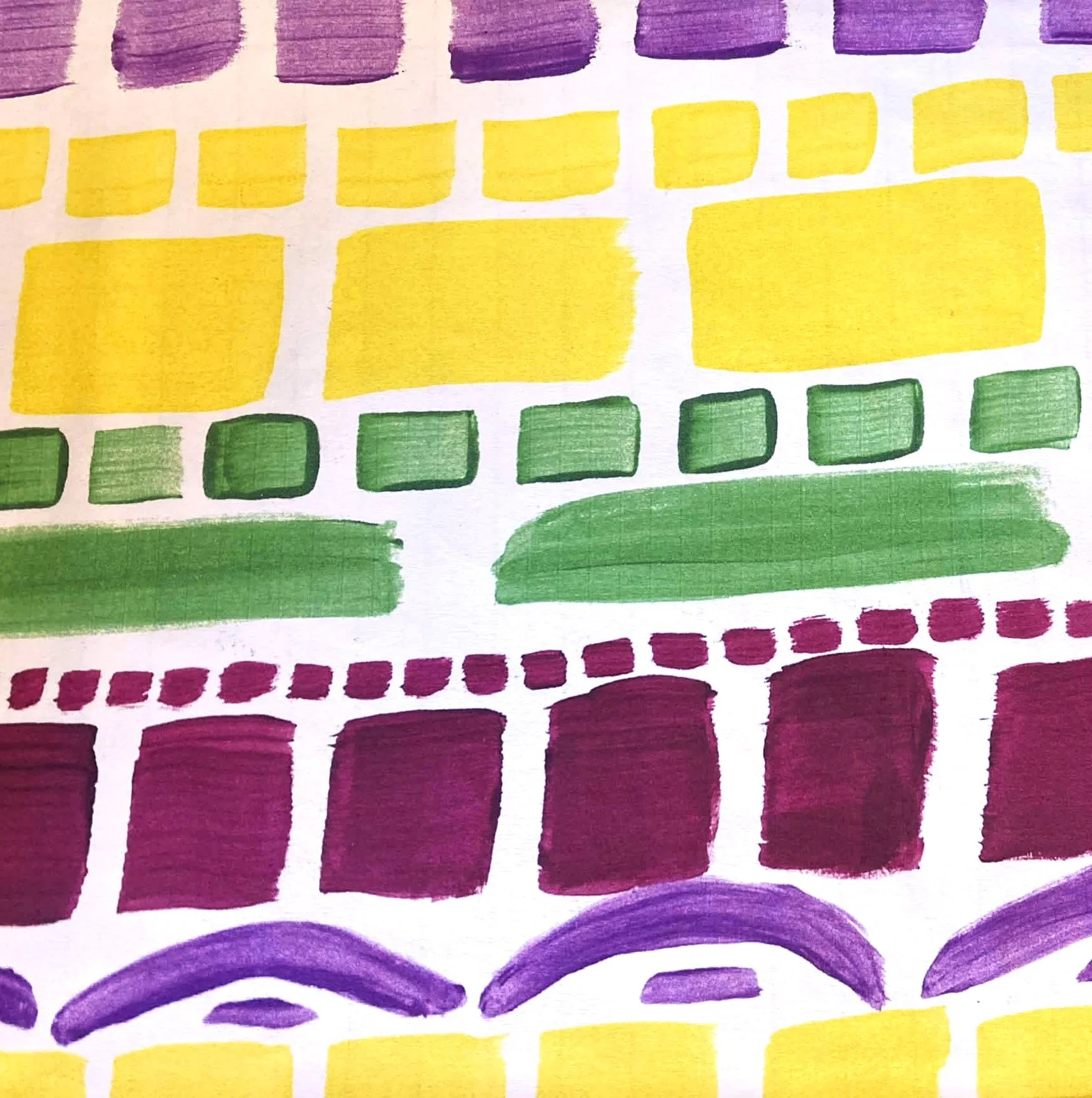
Materials Used: Acrylic Paint, Cardstock or Paint-Friendly Paper, Paint Brushes, Wet Wipes (or Wet Rags), Table Cover (can be newspaper, flattened garbage bags, etc.)
Alt. Materials (if paint is not allowed): Construction Paper (Pre-cut or with kids’ scissors), Glue Sticks, Cardstock
Resources: “Composing Color: Paintings by Alma Thomas” Introduction – Smithsonian American Art Museum, Alma Thomas Colorful Abstract Art Lesson | For Kids & Teachers – Rainbow Parrot Art, Alma Thomas: Your New Favorite Artist – National Gallery of Art, and TAP: ALMA THOMAS – TAP: The Art Project
When I began developing plans for my programs, I discovered that Pinterest was going to be my friend when it came to gathering inspiration from all the corners of the crafty internet. Like I said before, part of the goal for these classes was strengthening their cultural connections to the outside world, so I decided to start with an artist feature. I ran across a Pinterest post from a middle school art teacher covering Alma Thomas and chose to adapt that to better suit my adult participants.
You’ll notice that one of the videos I chose to show was technically made for a younger audience in mind, but I just prefaced it with an acknowledgement and explained how it was still an excellent source of information on her background. The videos listed above (including that one) were integrated into a deck of slides where I also briefly covered the principles of balance, pattern, and composition before we got into making our own paintings.
While the works themselves of Alma Thomas took a skillful hand, what I loved about featuring her is that it did not feel intimidating for participants to try to create their own artwork in her style. In the case of my recreation shown above, I kept things even more simplistic to make sure I could finish it while still helping students as needed. It was a fun exercise in choosing a color pallet, patterns, and trying different brush strokes.
Shelf Talkers
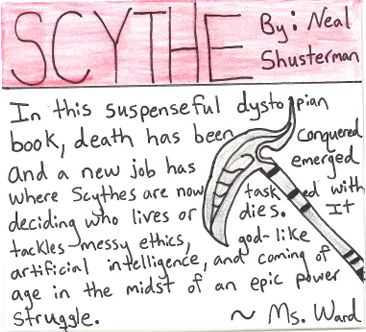
Materials Used: Cardstock (Pre-cut or with kid’s scissors), Ballpoint Pens, Pencils, Markers, Colored Pencils, Packing Tape (or Laminating Sheets)
Resources: Lightning Talk: Writing Compelling Shelf Talkers with Danielle King (Left Bank Books) – American Booksellers Association, ELA Lesson: Student-Created Shelf Talkers - Bookopolis Blog, The Art of the Shelf Talker - Mountains & Plains Independent Booksellers Association, Library Life: the shelf talkers I've been wanting - Chrissie Writes Newsletter, Shelf Talkers 101: Catching the Eye of New Readers - Chanticleer Book Reviews, Library Girl #YALit Shelf Talkers (at Browsers Bookstore and Beyond!) – The Adventures of Library Girl!, Show Us Your Shelftalkers – Publishers Weekly, The Power of Shelf Talkers in Stores and @ Your Library – RA for All, The Art of the Shelf-Talker... – The Green Apple Core, The Shelf Talker Solution – Y.A. Awesomsauce, Shelf Talker Shelf Talker Shelf Talker… - Kevin Sampsell
For those not familiar with the term, shelf talkers are small signs hanging from the edge of shelves to grab the attention of customers/patrons and convey information (usually about the product on the shelf). They are used in different contexts, but for this class we were taking direct inspiration from the kind you find in bookstores with staff reviews.
This was a simpler class (especially in terms of supplies needed), but I learned that simple can be just as engaging when you have a specific artistic goal and/or inspiration provided. I made sure to show lots of examples of different book review shelf talkers ranging from purely text-based to ones accompanied by intricate drawings that fit the books. We also talked about the writing portion of the shelf talker, and I shared some pointers for crafting short yet effective reviews.
Our education instructor offered for me to use their laminator afterwards, and that helped make the shelf talkers much more durable for when we put them on the shelves on the library. What I love about this library program is that not only was I able to display their art, but it also served a functional purpose of getting patrons to consider books they may have otherwise not picked up.
Holiday Crafts
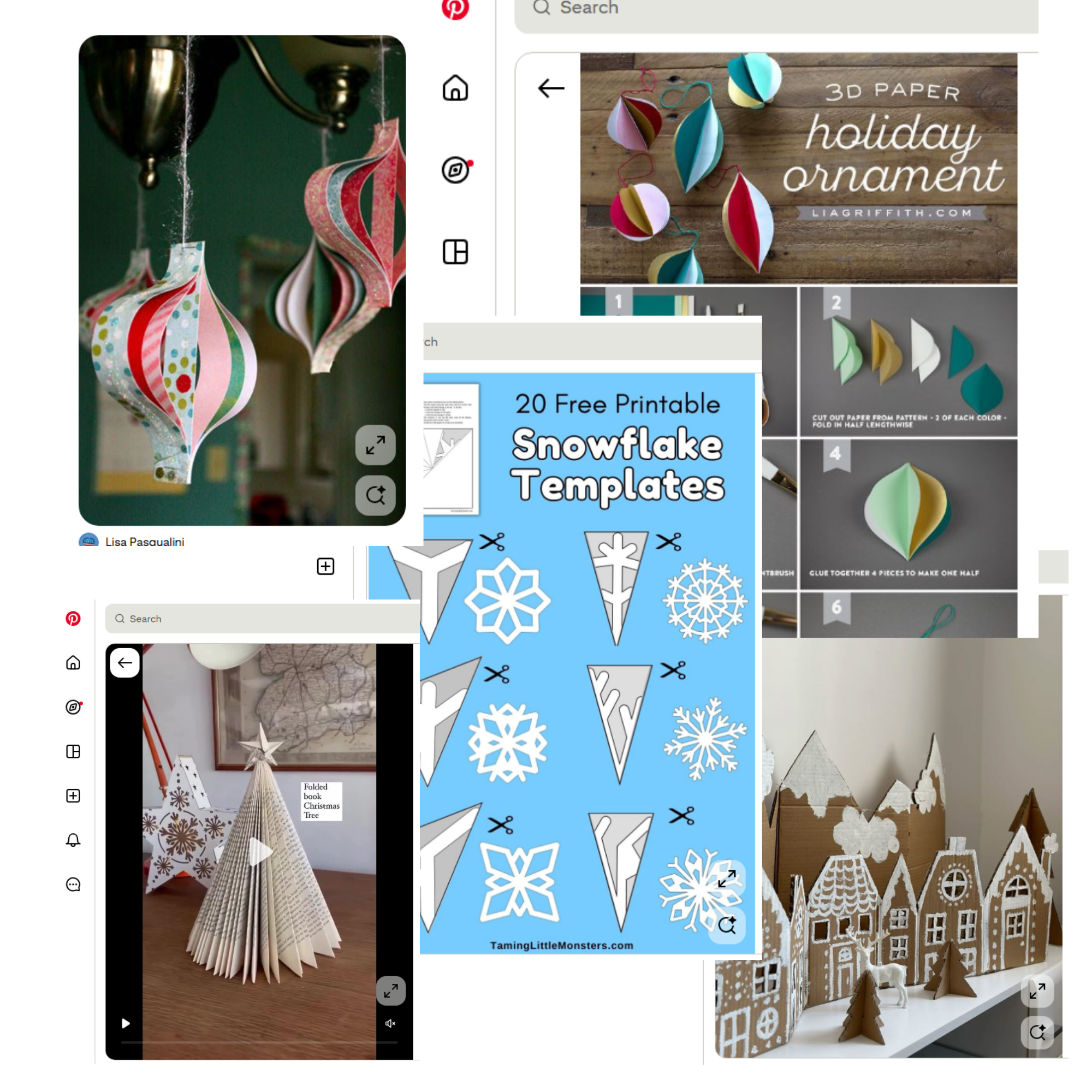
Materials Used (Depending On Which Crafts You Choose): Cardboard (Pre-cut in or with kids’ scissors), Paint / Paint Pens (or markers if not allowed), Patterned Paper, Solid Red and Green Paper, String (if allowed), Glue, Discarded Books
Resources: Let’s Create: 7 Foot Cardboard Gingerbread Village with @KateHickmanArt - YouTube– Glowforge, How to Make a Cute Christmas Tree & Reindeer Out of Cardboard | Hometalk, Pin on Santas Grotto – Mary Rose, How to Make 3D Paper Stars – The Merrythought, Paper Snowflake Templates | Free Printable Templates & Coloring Pages | FirstPalette.com, How to Make a Folded Book Christmas Tree / upcycling a book – Jess & Obie, How to Make Retro-Style 3D Papercut Ornaments - Lia Griffith, DIY Honeycomb Ball Ornament (Two-Tone) – Gift Wrapping Love, Simple Mid-Century Paper Ornaments - Lia Griffith
The winter holiday season can be especially difficult for incarcerated people because it is a reminder of how they can’t be with their loved ones or celebrate like they normally would. The prison I work at has multiple things going on during this time to help counter it where they can, but I also wanted to contribute by hosting a holiday-themed crafting session making decorations for the library.
I offered three different crafts: paper snowflakes, making a snowy village with cardboard and paint pens, and making 3D paper ornaments. You know what ended up being the most popular option? The paper snowflakes! I think the two main reasons for that were the nostalgia factor and how easy they were to do. While it can be good to challenge ourselves creatively, there is also something nice about turning off our brains for a bit while we cut out some paper and listen to lo-fi holiday tunes. Speaking of, this was the first time I sourced some music to play while everyone was crafting, and I think it really added to the experience. I kept it down low enough to where we could still hear each other speak, but it was nice for making quiet moments feel peaceful rather than awkward.
Printmaking
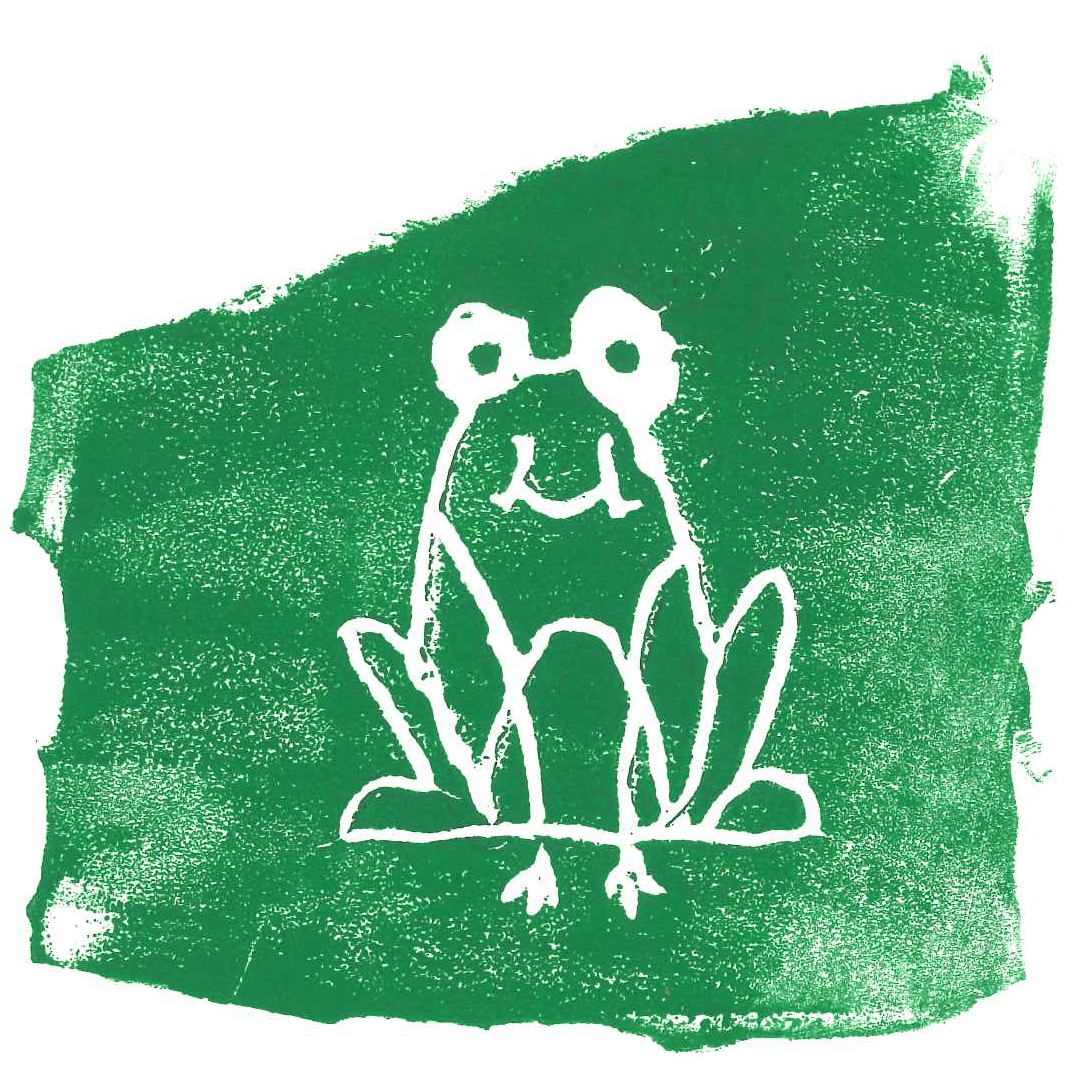
Materials Used: Cardstock, Styrofoam Trays or Sheets, Printmaking Ink or Regular Markers, Brayer or Rolling Pin or Other Tool For Pressing, Ballpoint Pens, Pencils, Tape
Resources:9 Types of Printmaking You Need to Know – Artsy, Styrofoam Printmaking Art Lesson – That Art Teacher, Intro to Printmaking – Davidson Art Online, Pressure + Ink: Introduction to Printmaking – The Museum of Modern Art, Foam Relief Printmaking Art Tutorial: Art With Trista – Art With Trista
Around the time I was planning our next program, I was fascinated with watching the layered process of making linocut prints. A post about DIY printmaking with Styrofoam came across my feed, and I knew I had to give it a try. My work often has leftover (clean) Styrofoam containers from events, and I was able to get permission from my boss to take those and bring in my printmaking supplies (the ink and brayers) for the class.
This was really fun to teach, but one thing I learned is that especially with more complicated crafts, it’s important to keep the size of the group to a manageable level. That way, you can make sure everyone gets the help they need in order to fully learn how to make the craft.
I only had one hour with the space for this class, and the majority of that time was given to participants drawing their designs and then carving them out from the Styrofoam. Towards the end, I started helping the last students ink their designs and lay them on the paper, not realizing that two others still weren’t done carving their designs. We ended up making it work and they were able to make their final pieces, but it was a good lesson for me on the importance of time management and better dividing my attention.
DIY Bookmarks
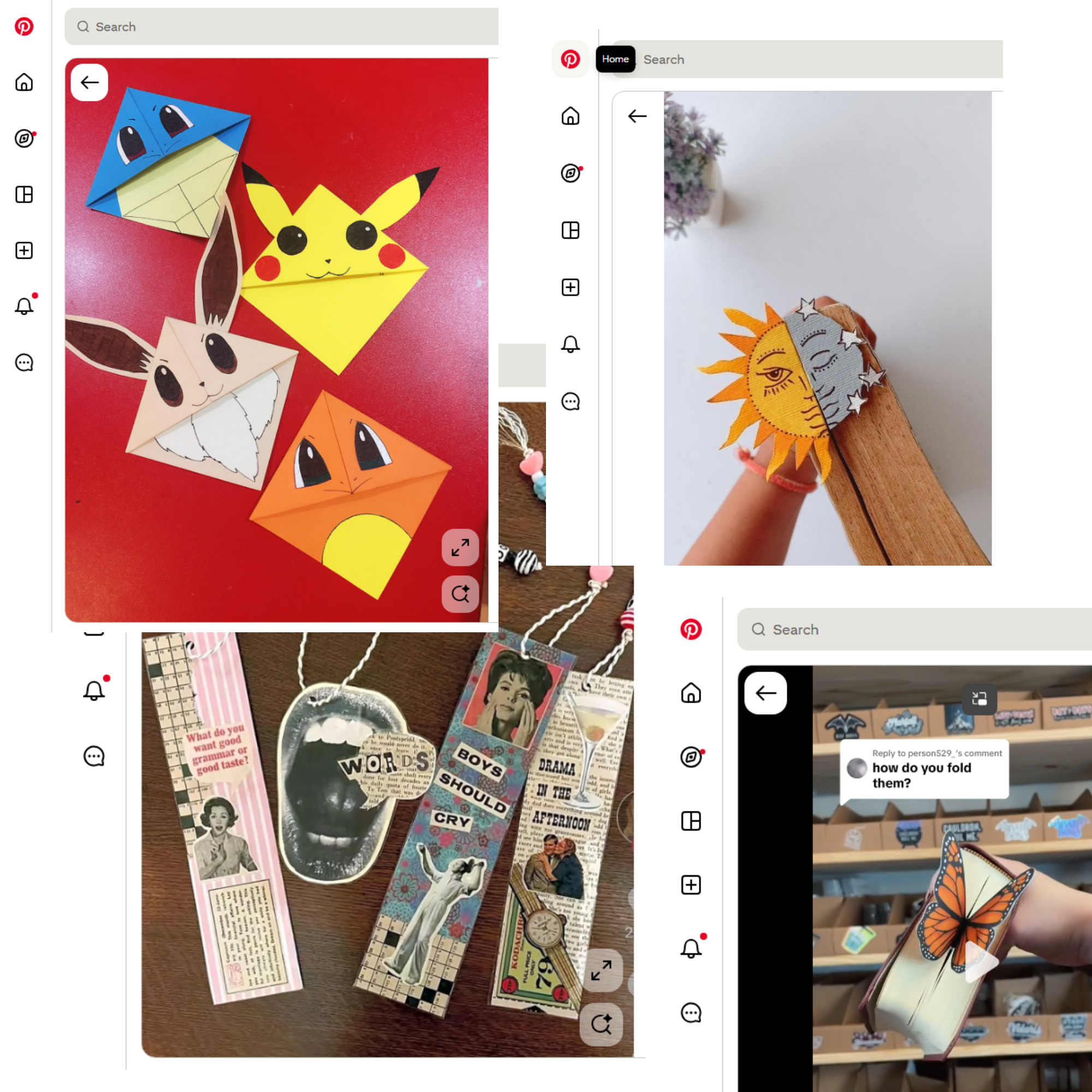
Materials Used: White Cardstock, Markers, Colored Pencils, Glue Sticks, Printer Paper and/or Origami Paper, Patterned Paper, Discarded Magazines (Pre-cut in or with kids’ scissors), Foil Glitter, Packing Tape
Resources:Viral Pop-up Butterfly Bookmark – Divyanshira Art, DIY Kawaii Bookmarks // Easy Origami Bookmark Corner – JR LOVE CRAFT, Magazine Collage Bookmark – Southeast Regional Library, Pin on Arte – Meaggie Moo’s, Pin on ya impreso – Maria Caceres, Pin on Gift ideas – Priyanka Bhateja, Triangle Corner Origami Bookmark for DIY Stationery – Easy Foldable Creations, Pin on Keenu – Cin Ng, Pin on DIY Gifts – Patience Rutherford, Pin on book marks🎨 – Melina Goldman, Collage bookmarks – Antu, Collage bookmarks from a lazy artist – Mylene Rocher, Collage Bookmarks – Amber Tidwell
Another surprise in my series of crafting programs, this ended up being my most popular one by a long shot both in terms of how many people wanted to sign up and how many participants afterwards asked when I would do it again. I think one reason is because it was the most familiar sounding craft so far as practically all of my patrons use some sort of bookmark. Another reason was likely because it was something they could take with them. All the other crafts talked about so far were displayed in the library (with some eventually going back to their artists if they asked). This one was especially loved because people love art that is usable!
What I loved about this class was that it was so easy to host (I incorporated a short lesson on collage and various ideas for bookmark styles, but it was otherwise a freeform crafting session.). I also got to use up a lot of leftover materials rather than buying new supplies. My limited budget definitely appreciated the break in spending, and it’s always great when I can incorporate sustainability into any of my programs.
The Quilts of Gee’s Bend
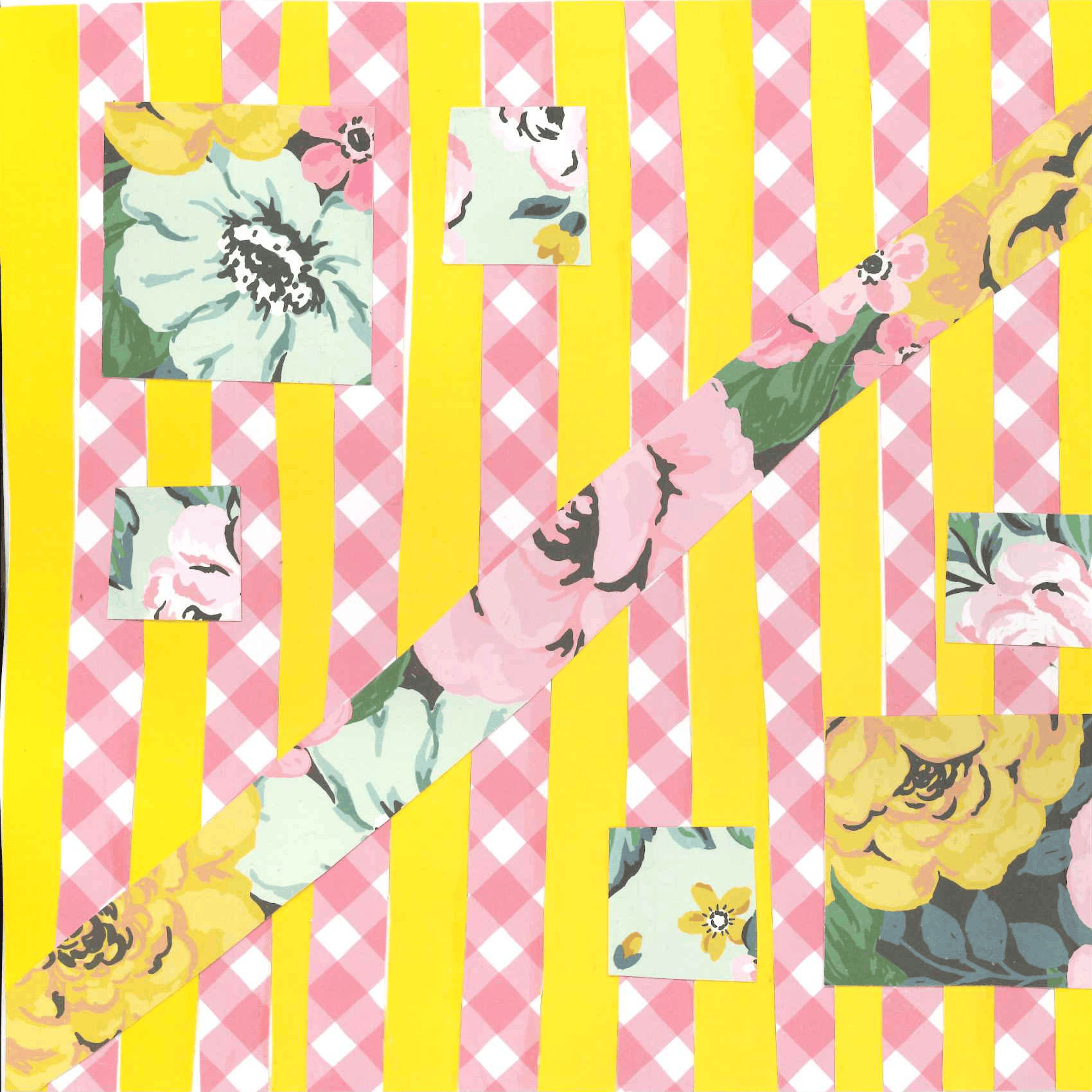
Materials Used: Cardstock, Patterned and Solid Paper of Different Colors, Glue Sticks, Kid’s Scissors (if not allowed, pre-cut paper into squares, strips, and other shapes)
Resources:The Quiltmakers of Gee’s Bend – Alabama Public Television, Quilting in Gee’s Bend – This is Alabama, How a Group of Women in This Small Alabama Town Perfected the Art of Quilting – New York Times Opinion, Famed Gee’s Bend Quilters are now on the runway and online – PBS NewsHour, Women Who’ve Made Gee’s Bend Quilts Are Finally Receiving Their Due – TODAY, The Quilts of Gee's Bend: A Slideshow - National Endowment for the Arts, Kith & Kin: the Quilts of Gee's Bend Exhibition — American Museum & Gardens, Black History Month Paper Craft: Gee’s Bend-Inspired Quilts - Woo! Jr. Kids Activities Children's Publishing, Teaching Principles of Design through the Quilts of Gee's Bend - Artful Ideas
I hosted this program in February, so I wanted to integrate it with the other things we were doing for Black History Month. I was digging around online for different Black artists whose work I thought would be inspiring yet accessible for participants to recreate in their own style when I came across a lesson plan on the quilts of Gee’s Bend, Alabama. This is a historically Black community affected by the ongoing effects of generational poverty driven by institutional failures / the legacy of slavery and how they became famous on the global scale for their unique folk art through quilting.
While we couldn’t sew our own quilts, I picked the next best thing which was patterned papers of all types to form quilt-like designs from. I started out with a brief background on the community and their art before getting into some of the principles of design that can be found in their works for students to consider integrating into their own creations. For the rest of the class, I played a documentary produced by Alabama Public Broadcasting (linked above) that went far more in depth about the community and their rise to fame in the art world. In this way, it ended up being a two-in-one program as both a crafting class and documentary screening.
I had students afterwards tell me how much they appreciated the opportunity to not only learn about a new form of art but also about the people developing their own style of this artform and their inspiring story. They also appreciated that I wasn’t afraid to acknowledge broader societal issues that are still present today, like racism, and how that is tied to the ongoing struggle for these artists to earn the money they deserve as makers of internationally recognized work.
The Unique Challenges for Prison Library Programming
A lot of what I’ve covered in this post so far is applicable to any library doing crafting programming, but there are some unique struggles to hosting these in a prison setting, including safety and scheduling that I also wanted to touch on.
I will fully acknowledge that the specific prison I work at is one of the safest in the state, if not the region, for a variety of factors including the point in their journeys the men who are sent to us usually are at. Even with that being the case, we still have to abide by the safety procedures designed for a more typical prison with a couple of exceptions made by our facility administration. No library wants to lose their supplies after a program, but it becomes especially important to keep track of everything when you are tasked with making sure patrons don’t take anything back to their living quarters that would be considered contraband.
The simplest way to do that I’ve found is to have a written count of the supplies and then re-counting everything once the class is over but before the participants leave. They are understanding that this is just something I have to do and that it also keeps them safe from being falsely accused if something were to otherwise go missing. I’ve also seen some techniques used by elementary school art teachers that would be helpful like using duct tape to create attached sets of markers.
The other challenge I run into with these programs that is more unique to the prison library setting is scheduling. While incarcerated individuals on the whole have more time away from work or other obligations, there are still only limited windows when I am able to get them in the library long enough to properly host a crafting class. This is compounded by the fact that the space we use for these classes is also used by other groups and classes as well as the occasional risk of movement coming to a grinding halt for inspection, lockdown, or other events I am not always made aware of ahead of time.
I still haven’t fully found the solution to this, but I am working on more proactively consulting co-workers who may have knowledge I don’t have on whether a certain day and time would work for hosting a program before I put it on my schedule, make flyers for the living quarters, and have participants sign up. My library aides (incarcerated individuals themselves) have also been very helpful in keeping an ear out for things that may affect my ability to host a class on a particular day. The key here is consistent, proactive communication as there are so many moving parts to what we have going on at our facility. Flexibility is a good skill to have, too, as there will always be the chance of unexpected things happening despite your best efforts. That is a skill I see in a lot of my patrons, especially those who have been incarcerated for a longer period of time, and it is an area I strive to likewise grow in.
Future Ideas for Programs
In this past year, I have only scratched the surface with the types of crafting classes I could host. To give further inspiration to my colleagues, I ended my talk with a list of other ideas to consider, including:
Origami
Zines
Radial Paper Relief Sculptures
Pointillism
Paper Weaving
Recreating Henri Matisse Works
Mosaic Art
Agamographs
Collage
Blackout Poetry
Toilet Paper Tube Creatures
Pop-Up Cards
Blind Contour Drawing
The Main Takeaway
Every good talk needs one key takeaway the audience will (hopefully) remember even if they forget all the other details talked about. My main point is this: Even if you don’t view yourself as artistic or crafty, even if it’s been years since you last picked up a paintbrush or a colored pencil, you can still host crafting programs and give your patrons the opportunity to explore their own creativity. This can also be done with minimal supplies and even when there are security restrictions, like with prison libraries.
Engaging in the arts is such a great way for our patrons to connect with themselves and with others, just like they do when reading books from our collection. We serve as a cultural hub for our communities (in almost all types of libraries) and programming like this furthers that goal as well as shows more people that the library truly is for everyone.
I always look forward to the days when I’m able to host a crafting class, and it is something I will continue to pursue for as long as I am working here (and in any other library that may come after). For that same reason, and for my personal development as a creative person, I am always keeping an eye out for new creative mediums and projects to explore that may translate into good programming. Have you hosted crafty programs before? Which ones were your favorite? I’d love to hear all about it!
Till Next Time,
Sam
